01 / CIRCUITS
Head-direction networks
How do populations of neurons represent and maintain an internal estimate of heading?
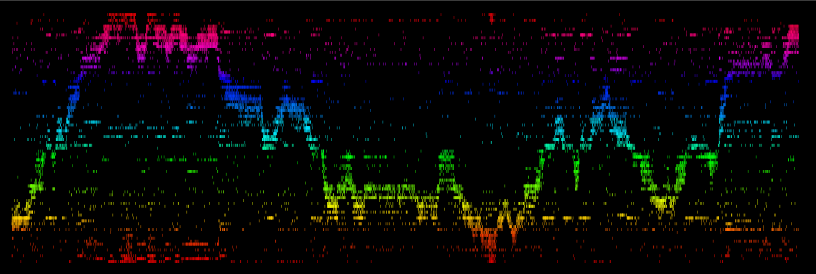
Systems neuroscience · University of Manchester
We investigate the neural circuits that give us a sense of direction, and how vision and self-motion signals keep that internal compass aligned with the world.
Explore our researchWhat we study
Knowing where we're facing feels effortless. Behind that experience lies a network of neurons that continuously tracks direction, combines information from our movements and senses, and anchors our internal representation to the environment.
At the Duszkiewicz Lab, we study the circuitry and computations that make this possible, with a focus on the head-direction system and the cortical networks supporting spatial orientation.
01 / CIRCUITS
How do populations of neurons represent and maintain an internal estimate of heading?
02 / SENSORY INPUT
How do landmarks and visual information calibrate the brain's directional representation?
03 / COMPUTATION
How do cortical circuits integrate signals and stabilise spatial representations over time?
Our approach
We combine large-scale neural recordings, controlled visual environments and computational analysis to understand how spatial representations emerge from circuit activity.
Get in touch
For research enquiries or collaborations, please find our current contact details through the University of Manchester staff directory.
Find us